Exploring the shade
Anyone can learn and repeat photographic lighting setups, the advanced part is to refine what you have for best results.
Working with studio lights is far easier than attempting to modify outdoor lighting, so after attending a workshop earlier this year I have practised one aspect demonstrated very well by our host.
When you find a suitable location for your portrait and start looking at the light qualities, don't just take a shot and think that will do, move the model around and see how the lighting changes.
This is particularly important when you are photographing a subject in strong light.
This image of Blixa was taken in the entrance to an underground car park. Besides moving the camera and Blixa to ensure a good composition, I asked her to move backwards out of the strong sunlight to a point that the light reflected from the concrete became a good fill light. By not moving her totaly into the shade she still has catch lights in her eyes. There is a point, which you will find by experimentation, that the overhead light is greatly reduced and the fill blends in perfectly.
You may have to take a few shots to see the effect as it can be very subtle, but it works in almost every situation.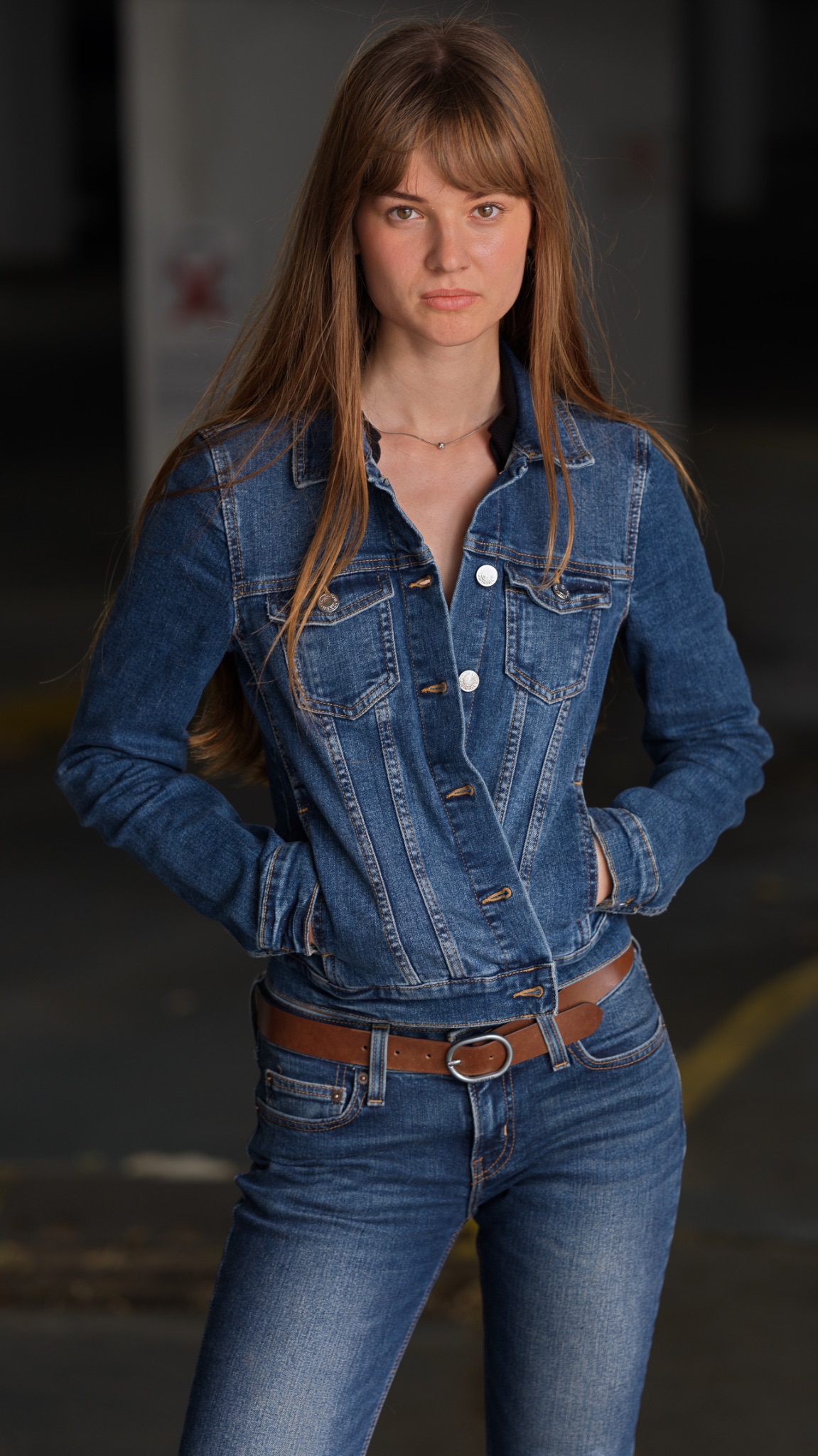
The settings for this image were
ISO: 200
Aperture: f/2.5 (wide open)
Shutter: 1/40
Aperture priority mode, centre weighted
With a -0.7 stop underexposure to help the highlights.
X2D with a XCD 90V
How could I improve the shot?
Slightly more under exposure may have stopped the buttons burning out, but they are the highest contrast part of the image and bringing back the shadow detail may have been difficult.
Here is the monochrome version
